Google Gemini was used to create the phytochemical content cards. Due to the amount of the data, not all of it could be manually verified. (This page may require further scrutiny)
.jpg)
(Wikimedia)1
.jpg)
(Wikimedia)2
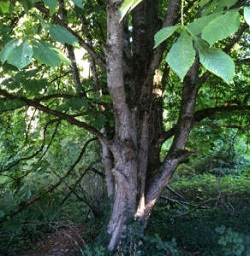
"Aesculus hippocastanum is a deciduous Tree growing to 30 m (98ft) by 15 m (49ft) at a fast rate.
It is hardy to zone (UK) 3 and is not frost tender. It is in flower in May, and the seeds ripen in September. The flowers are hermaphrodite (have both male and female organs) and are pollinated by Bees.[PFAF]
Suitable for: light (sandy), medium (loamy) and heavy (clay) soils, prefers well-drained soil and can grow in nutritionally poor soil. Suitable pH: acid, neutral and basic (alkaline) soils. It can grow in semi-shade (light woodland) or no shade. It prefers dry or moist soil. The plant can tolerates strong winds but not maritime exposure.
It can tolerate atmospheric pollution." [PFAF]
- General: "A. hippocastanum grows to 36 metres (118 ft) tall, with a domed crown of stout branches; on old trees the outer branches often pendulous with curled-up tips.[3]" [Wiki]
- Leaves: "The leaves are opposite and palmately compound, with 5-7 leaflets; each leaflet is 13-30 cm long, making the whole leaf up to 60 cm across, with a 7-20 cm petiole. The leaf scars left on twigs after the leaves have fallen have a distinctive horseshoe shape, complete with seven "nails". [3]" [Wiki]
- Flowers: "The flowers are usually white with a small red spot; they are produced in spring in erect panicles 10-30 cm tall with about 20-50 flowers on each panicle. [3]" [Wiki]
- Fruit: "Usually only 1-5 fruit develop on each panicle; the shell is a green, spiky capsule containing one (rarely two or three) nut-like seeds called conkers or horse-chestnuts. Each conker is 2-4 cm diameter, glossy nut-brown with a whitish scar at the base. [3]" [Wiki]
- Organoleptic properties [dried ripe seed] Odour: slight; taste: bitter, acrid (1). [WHO SMPV.2]
Synonyms
- Aesculus asplenifolia [PFAF]
- Aesculus castanea [PFAF]
- Aesculus memmingeri [PFAF]
- Aesculus procera [PFAF]
- Habitat / Range: Found under cultivation in Port Alberni, Tofino, Victoria. [Personal observation] Absent from [E-flora] & [PCBC] "Aesculus hippocastanum is native to a small area in the Pindus Mountains mixed forests and Balkan mixed forests of South East Europe.[5] However, it can be found in many parts of Europe as far north as Gästrikland in Sweden." [Wiki] "It is distributed in parts of the Balkan peninsula (Yugoslavia, Greece, Albania) and in one area in eastern Bulgaria (Tutin et al. 1968). It was introduced into central Europe in the 16th century and was extensively planted for ornament or shade in European and non-European countries. It is locally naturalized in western and central Europe." [Bajaj MAPS 7] "Aesculus hippocastanum is a tree which grows in Iran, Northen India, Asia Minor, and Southeast Europe from the Balkans to the Caucasus, as well as in the U.S.A." (kapusta2007)
Hazards
- "This plant is potentially toxic if ingested and should not be used internally without professional supervision[254]." [PFAF]
- During Pregnancy: [dried ripe seed] "...has been used in clinical trials involving pregnant women with no ill effects (21, 41). However, the drug should not be administered during pregnancy without medical supervision." [WHO SMPV.2] Avoid use in pregnant and breast-feeding women (Bown, 1995) [Bascom IHM] HCSE presents Minimal risk during pregnancy. The unprocessed preparation, however, is containdicated during pregnancy and lactation. [Mills HMPL]
- Potential Allergen: Horse chestnut pollens are also a common cause of allergic condition in urban children.[28][PSM Harmana]
- Interactions:
- Anticoagulant, antiplatelet herbs: "Horse chestnut [Herb & Drug] given with anticoagulant, antiplatelet herbs increases risk of bleeding (Jellin et al, 2008)." [Skidmore-Roth MHH]
- Hypoglycemic herbs: Horse chestnut [herb] given with hypoglycemic herbs increases hypoglycemia (Jellin et al, 2008). [Skidmore-Roth MHH]
- Antidiabetics: [Drug] May increase the hypoglycemic effects of diabetes medications. [Skidmore-Roth MHH]
- Iron salts: [Drug] Horse chestnut tea may decrease the absorption of iron salts; separate by 2 hours. [Skidmore-Roth MHH]
- Saponins: "The seed is rich in saponins[10, 21, 65]. Although poisonous, saponins are poorly absorbed by the human body and so most pass through without harm. Saponins are quite bitter and can be found in many common foods such as some beans. They can be removed by carefully leaching the seed or flour in running water. Thorough cooking, and perhaps changing the cooking water once, will also normally remove most of them. However, it is not advisable to eat large quantities of food that contain saponins. Saponins are much more toxic to some creatures, such as fish, and hunting tribes have traditionally put large quantities of them in streams, lakes etc in order to stupefy or kill the fish[K]. Avoid in patients with kidney or liver disease. Avoid if taking warfarin as can interfere with anticoagulant therapy [301]." [PFAF] "The saponins contained in non-controlled-release preparations of horse chestnut extract tend to cause stomach upset when the extract is taken at therapeutic doses of 250-313 mg twice daily, equivalent to 100 mg of aescin." [Schulz RP]
- Seeds: "Health risks following the proper administration of designated therapeutic dosages are not recorded. Susceptible patients may nevertheless experience mucous membrane irritations of the gastrointestinal tract (e.g. nausea) following intake of the drug; decrease in kidney function with pre-existing renal insufficiency and acute nephrotoxicity. Hepatotoxicity and urticaria have also been observed." [PDR]
- "The intake of larger quantities of Horse Chestnut seeds (in one case of a child with 5 seeds) can bring about vomiting, diarrhea, severe thirst, reddening of the face, enlargement of pupils, vision and consciousness disorders. Following stomach and intestinal emptying (gastric lavage, sodium sulfate) and the administration of activated charcoal, therapy for poisonings consists of diazepam for spasms, atropine for colic, electrolyte replenishment and sodium bicarbonate infusions for any acidosis that may arise. Intubation and oxygen respiration may also be necessary." [PDR]
- "Seeds “poisonous” and must be specifically prepared before being used medicinally. Never consume them in any form unless a knowledgeable manufacturer has processed them properly. Children have died after ingesting untreated seed....Tests for chronic toxicity (34 weeks in rats and dogs) showed no cumulative toxic effects or any evidence of embryotoxic or teratogenic effects. Isolated cases of GI distress, itch, and nausea are reported (SHT). Commission E reports rare GI disturbances (AEH).... Fleming (Herbal PDR, 1998) cautions that the intake of too many horse chestnut seed (in one case, a child with 5 seed) can cause diarrhea, disorders of consciousness and vision, enlargement of the pupils, flushing of the face, severe thirst, and vomiting. In case of poisoning, Fleming recommends evacuation of the stomach and intestine (gastric lavage, sodium sulphate) and administration of activated charcoal. Then symptom management (PHR)."[HMH Duke]
- Not for Children: "There is no therapeutic rationale for the use of Semen Hippocastani in children."[WHO SMPV.2] "Mild intoxication upon ingestion of berries by children; apparently ingestion of ~ 20 berries or chewing the fresh bark is necessary to induce pronounced symptoms" [PTH]
- "Ipecac/cathartic not recommended, activated charcoal/lavage (within 1 hour) may be useful; dilute with milk or water; activated charcoal or lavage if 3 or more seeds are ingested" [PTH]
- Leaf:
- "One case of liver damage following intramuscular administration of an extract of the drug (origin details of the drug uncertain) is known." [PDR]
- Drug Interactions: "Horse Chestnut leaf has a coumarin component and may interact with warfarin, salicylates and other drugs with anti-coagulant properties." [PDR]
- Adverse Reactions
- "May color alkaline urine red; do not confuse with hematuria;" [PTH]
- Do not make tea out of raw, unprocessed horse chestnut seeds (McCaleb et al., 2000). [Bascom IHM]
"Horse chestnut extract and aescin have been tested for acute toxicity in several animal species (mouse, rat, guinea pig, rabbit, dog). The "no effect" dose is approximately 8 times higher than the dose recommended for therapeutic use in patients. Tests for chronic toxicity (34 weeks in rats and dogs) showed no cumulative toxic effects or any evidence of embryotoxic or teratogenic effects. The results of animal studies are corroborated by decades of use in patients with no reports of harmful effects due to overdosing. No studies have been published on mutagenicity or carcinogenicity (Hansel et al.,1992)." [Schulz RP]
Edible Uses
- Seed: "The roasted seed is used as a coffee substitute[2, 7]. Seed - cooked. It can be dried, ground into a powder and used as a gruel[7, 46, 55, 61]. The seed is quite large, about 3cm in diameter, and is easily harvested. It is usually produced in abundance in Britain. Unfortunately the seed is also rich in saponins, these must be removed before it can be used as a food and this process also removes many of the minerals and vitamins, leaving behind mainly starch. See also the notes on toxicity." [PFAF] "The seed contains up to 40% water, 8 - 11% protein and 8 - 26% toxic saponins[218]. The following notes apply to A. californica, but are probably also relevant here:- The seed needs to be leached of toxins before it becomes safe to eat - the Indians would do this by slow-roasting the nuts (which would have rendered the saponins harmless) and then cutting them into thin slices, putting them into a cloth bag and rinsing them in a stream for 2 - 5 days[213]" [PFAF]
Horse chestnut seeds are considered inedible and poisonous. The bitter flavor prevents consumption of large amounts. The leaves, flowers, young sprouts, and seeds are toxic. [PSM Harmana] "Roasting horsechestnut appears to destroy its toxins." [Mills HMPL]
Other Uses
- Soap: "Saponins in the seed are used as a soap substitute[169]" [PFAF]
- Wood: "Soft, light, not durable. Of little commercial value, it is used for furniture, boxes, charcoal[2, 11, 46, 61]" [PFAF]
- Dye: "A yellow dye is obtained from the bark[4]. The flowers contain the dyestuff quercetin[223]" [PFAF]
- Tannin: "The bark and other parts of the plant contain tannin, but the quantities are not given[223]" [PFAF]
Medicinal Uses
"The plant is taken in small doses internally for the treatment of a wide range of venous diseases, including hardening of the arteries, varicose veins, phlebitis, leg ulcers, haemorrhoids and frostbite[238, 254]. It is also made into a lotion or gel for external application[254]. The German Commission E Monographs, a therapeutic guide to herbal medicine, approve Aesculus hippocastanum for chronic venous insufficiency in the legs (see [302] for critics of commission E)." [PFAF] Other [Non-seed] preparations made from horse chestnut leaves, bark, and flowers have been negatively appraised and should no longer be prescribed. [Schulz RP]
- Bark: "The bark is anti-inflammatory, astringent, diuretic, febrifuge, narcotic, tonic and vasoconstrictive[4, 7, 222]. It is harvested in the spring and dried for later use[4]." [PFAF]
- Tea: "A tea made from the bark is used in the treatment of malaria and dysentery, externally in the treatment of lupus and skin ulcers[4, 222]." [PFAF]
- Fruit: The pericarp [Entire fruit, without seed] is peripherally vasoconstrictive[7] [PFAF]
- Seeds: "They have been used in the treatment of rheumatism, neuralgia and haemorrhoids[4]. They are said to be narcotic and that 10 grains of the nut are equal to 3 grains of opium[213]" [PFAF] "As early as the 1800s, horse chestnut seed extracts were used therapeutically in France. Although preparations of other parts of the tree have been used medicinally, only the efficacy of the dried seeds has been proven." [Barrett HCTHR]
- Harvesting: "The suitable time for collection of the drug coincides, according to the literature, with the period when the fruit falls in autumn. However, the season when the seed has its maximum content of aescin is the month of January; the content declines both before and during seed germination. (Profumo et al. 1987a)." [Bajaj MAPS 7]
- Unproven uses: "Horse Chestnut seeds are used for symptoms of post-traumatic and post-operative soft tissue swelling. Further indications are painful injuries, sprains, bruising, pain syndrome of the spine, edema, rheumatic disease and varicose veins."[PDR]
- Oil: "An oil extracted from the seeds has been used externally as a treatment for rheumatism[254]" [PFAF]
- Homeopathic treatments include hemorrhoids, lumbar and low back pain, venous back pressure. [PDR]
- Preparation: "A dry extract is manufactured from Horse Chestnut seeds standardized to a content of 16-20% triterpene glycosides (calculated as anhydrous aescin). [PDR] Stabilized extract of Horse Chestnut (5:1 ) is standardized for aescin; tincture of Horse Chestnut 1:1 with 75% ethanol; isolated aescin." [PDR]
- Daily Dosage: "Oral—Aescin from encapsulated standardized extracts are initially given at doses of 10 mg (Chandler, 1993). The encapsulated standardized extract has been used for the treatment of postoperative or traumatic edema, hemorrhoids or symptoms due to varicose veins in doses providing 40 to 120 mg of aescin per day (Schlesser, 1991). Aescin (escin) 100 mg corresponding to 250-312.5 mg extract may be administered twice daily in delayed-release form." [PDR]
- Homeopathic Dosage: "5 drops, 1 tablet or 10 globules every 30 to 60 minutes (acute) and 1 to 3 times daily (chronic); parenterally: 1 to 2 ml 3 times daily sc; ointment 1 to 2 times daily (HAB1)." [PDR]
- Storage: The herb should be stored in a dry and dark place.[PDR]
- Root: "A compound of the powdered roots is analgesic and has been used to treat chest pains[257]" [PFAF]
- Leaves: "A tea made from the leaves is tonic and is used in the treatment of fevers and whooping cough[222, 240, 254]" [PFAF]
- Indications: "Venous conditions (chronic venous insufficiency) Treatment of symptoms found in pathological conditions of the veins of the legs (chronic venous insufficiency), for example pain and a sensation of heaviness in the legs, nocturnal cramps in the calves, pruritis and swelling of the legs." [PDR] "Leaf preparations used in European traditions for eczema, varicose veins, supportive treatment of varicose ulcers, phlebitis, thrombophlebitis, hemorrhoids, menstrual spastic pain, soft tissue swelling from bone fracture and sprains, and other uses. Effectiveness of leaf preparation claims is unsubstantiated.[34]" [PSM Harmana]
- Unproven Uses: "Eczema, superficial and deep varicose veins, leg pains, phlebitis, hemorrhoids, pains before and during menstruation. In folk medicine, the leaves are used as a cough remedy, as well as for arthritis and rheumatism." [PDR]
- Mode of Administration: "Extracts of the drug are contained in "vein teas" or "hemorrhoid teas," as well as in pharmaceutical preparations for the treatment of venous symptoms." [PDR]
- Preparation: One ampule corresponds to 4 mg flavones in 0.9% NaCl [PDR]
- Daily Dosage: Infusion (as a tea)—Pour boiling water over 1 tsp. of finely cut drug and strain after 5 to 10 minutes (ltsp = 1 gm drug).[PDR]
- Bach: "The buds are used in Bach flower remedies - the keywords for prescribing it are 'Failure to learn by experience', 'Lack of observation in the lessons of life' and hence 'The need of repetition'[209]. The flowers are used in Bach flower remedies - the keywords for prescribing it are 'Persistent unwanted thoughts' and 'Mental arguments and conversations'[209]" [PFAF]
- Preparation: "To prepare this Bach Flower Remedy, you need to pick the entire twig, roughly 15 cm in length, while the shoot has come out of the bud, but prior to the unfolding of the leaves. In fact, this is a specific phase of development that needs to be carefully watched. Initially the buds distend and subsequently, the gummy scales drop behind and finally the shoot emerges from the bud. It may be noted even the resins or the sap are also an element of this flower essence remedy, though they mess up the saucepan, which will require scouring with a cleaner." [Herbs2000]
- Uses "A Bach Flower Remedy, Chestnut Bud is especially indicated for the youthful and reckless mind that is not predisposed to put together the experiences of every day life. It is also a valuable remedy for curing the condition wherein an individual is unable to take lessons from earlier mistakes in his or her life." [Herbs2000]
Actions
"Horse chestnut is an astringent, anti-inflammatory herb that helps to tone the vein walls which, when slack or distended, may become varicose, haemorrhoidal or otherwise problematic[254]. The plant also reduces fluid retention by increasing the permeability of the capillaries and allowing the re-absorption of excess fluid back into the circulatory system[254]." [PFAF]
"This tree produces large seeds commonly known as horse chestnuts or buckeyes. A number of reports dating from the early 18th century have indicated therapeutic properties for horse chestnuts. These have ranged from antifever to, at the end of the 19th century, antihemorrhoidal properties (2). Horse chestnut is most often used as a treatment for venous insufficiency. This is a condition associated with varicose veins, when the blood pools in the veins of the legs and causes aching, swelling, and a sense of heaviness." (kapusta2007)
"The extracts of horse chestnut show beneficial effects on venous insufficiency and have many positive pharmacological effects on the skin (5). The aescin is a potent anti-inflammatory principle, which also reduces capillary fragility and prevents leakage of fluids into surrounding tissues. These saponins have also been used in shampoos, shower foams, creams, lotions, and toothpastes." (kapusta2007)
"The horse chestnut extracts have been demonstrated to be a potent scavenger of active oxygen. This showed the highest activity of 65 plant extracts tested, was more powerful than vitamin E, and exhibited a potent cell-protective effect linked to antiaging properties of antioxidants (6). The major principles of these activities are flavonoids present in the extracts. This group of secondary metabolites shows radical scavenging, antibacterial, and antiviral activities, and they are used in varicosis and capillary fragility. Recent work on flavonoids from the seeds of Aesculus chinensis demonstrated their activity against parainfluenza virus type 3 and influenza virus type A (6). Regarding the flavonoids from Aesculus hippocastanum, literature provides inconsistent data. The detailed work on structural characterization of flavonoids was performed by Hübner and co-workers and showed that they were glycosides of quercetin and kaempferol and some of them occurred as acylated forms (8). In the conclusion of this work, however, the authors pointed out that the concentration of these compounds in horse chestnut seeds is low (0.3%, calculated as rutin equivalent) and their contribution to the therapeutic efficacy of crude drug is unlikely. This statement remains inconsistent with the literature data cited above indicating the main role of horse chestnut flavonoids in radical scavenging activity of the extracts." (kapusta2007)
- "The whole extract was more antiinflammatory than just aescin. In addition, an extract excluding aescin also exhibited antiinflammatory activity suggesting antiinflammatory agents other than aescin (CAN)."[HMH Duke]
- "Barringtogenol-C-21 and hippocaesculin have in vitro antitumor activity (PNC)." [HMH Duke]
- The leaf infusion is expectorant and antirheumatic. [Pieroni EBDBalk]
- The fruit decoction is antitussive and anthypertensive. [Pieroni EBDBalk]
- The fruit tincture is antirheumatic. [Pieroni EBDBalk]
- HCSE (Horse Chestnut Seed Extract) has antioxidant effects.[Mills HMPL]
Pharmacological Activity Profile
Categorized Biological Effects & Clinical Indications
- Analgesic (1; CAN; CRC); [HMH Duke][Duke]
- Anodyne Steinmetz; [Duke]
- Antiinflammatory (2; APA; MAB; PNC; SHT); [HMH Duke][Skidmore-Roth MHH]
- Antiirritant (1; MAB);[HMH Duke]
- Vulnerary (f; CRC). [HMH Duke][Duke]
- Anticapillary Fragility (1; SHT); [HMH Duke]
- Anticoagulant [Bascom IHM]
- Circulotonic (1; MAB); [HMH Duke]
- Hemostatic Takeda; [Duke]
- Hypertensive (1; CAN); [HMH Duke]
- Hypotensive (1; CAN); [HMH Duke]
- Vasoconstrictor (f; CRC); [HMH Duke][Duke]
- Venotonic (1; MAB); [HMH Duke]
- ACTH-genic (1; PNC); [HMH Duke]
- Corticogenic (1; PNC); [HMH Duke]
- Natriuretic (1; FNF); [HMH Duke]
- Alterative Steinmetz; [Duke]
- Tonic (f; CRC; FAD); [HMH Duke][Duke] (Seeds)[PFAF]
- Antitumor (1; PNC); [HMH Duke]
- Antiviral (1; CAN); [HMH Duke][Wink APR39]
- Cytotoxic (1; MAB); [HMH Duke]
- Decongestant (Seeds)[PFAF]
- Expectorant (Seeds)[PFAF]
- Sternutator (f; CRC); [HMH Duke][Duke]
- Narcotic (f; CRC); [HMH Duke][Duke]
- Antiedemic (2; APA; MAB; SHT); [HMH Duke]
- Antiexudative (1; CAN; MAB; PHR); [HMH Duke]
- Antihyaluronidase (1; MAB); [HMH Duke]
- Antiwrinkle (1; FNF); [HMH Duke]
- Astringent (1; FAD); [HMH Duke][Duke]
- Piscicide (1; CRC); [HMH Duke]
"As found in different animal tests and preclincal investigations, the principal ingredient of Horse Chestnut seed extract, triterpene glycoside mixture (aescin), has an anti-exudative, vascular tightening effect, and reduction of vascular permeability which result in an antiedemic effect. The vein-toning properties of the Horse Chestnut extract also demonstrated improvement of venous return flow. A significant reduction of transcapillary filtration was seen in a placebo-controlled human pharmacological trial (Bisler, 1986). Significant improvement in the symptoms of chronic venous insufficiency was demonstrated in diverse, randomized, double-blind and cross-over studies (Calabrese, 1993; Steiner, 1990). There are indications that Horse Chestnut seed extract reduces the activity of lysosomal enzymes, which increases in chronic pathological conditions of the veins. The enzymes will break down glycoacalyx (mucopolysaccharides) in the region of the capillary walls, allowing proteins to leak into the interstitium. The activity of the enzymes is reduced by the aescin and so the breakdown of glycoacalyx is also inhibited. The transcapillary filtration of low-molecular proteins, electrolytes and water into the interstitium is inhibited through a reduction of vascular permeability by the aescin." [PDR]
EFFECTS: HORSE CHESTNUT LEAF
"The main active principles of the anti-exudative effect and
improvement of venous tone are hydroxycoumarins (aesculin
and fraxin), triterpene saponins in the petioles and leaf veins,
flavonoids and a rich supply of tannins. Although the drug is
said to have an anti-exudative effect and improve venous
tone, there is a lack of clinical data to support the efficacy."[PDR]
Antitumor Activity Research
Mechanisms of Action & Clinical Potential
Can Aesculus treat cancer?
Research indicates that β-escin and specific acyl-saponins possess significant antitumor properties. While much research is in vitro (petri dish), animal studies have shown promising results. For example, Aescin from A. chinensis var. wilsonii demonstrated a 43.5% inhibition rate on H22 tumor growth in mice at doses of 2.8 mg/kg. However, because effective cytotoxic doses in humans are estimated to be high, these compounds are currently viewed as potential inhibitors of cancer progression rather than standalone cures.
G1-S Cell Cycle Arrest
Target: Colon Cancer (HT-29), Leukemia
β-escin acts like a brake pedal at the G1-S Phase checkpoint. It prevents the cell from moving from "Growth" to "DNA Replication" by:
- Boosting p21 (WAF1/CIP1): A protein that halts division (the "Red Light").
- Reducing Cyclins A & E: Removing the proteins that drive the cell forward (the "Gas Pedal").
- Reducing Rb Phosphorylation: Keeping the "Rb" protein in a locked state.
Source: A. hippocastanum, A. chinensis
Apoptosis & Alternative Death

Target: Leukemia (HL-60, K562), Liver (HepG2)
Compounds force cancer cells to die via controlled pathways:
- Classic Apoptosis: Marked by DNA fragmentation and Annexin V+ markers (Leukemia).
- Caspase-Independent Death: A unique "backdoor" cell death pathway observed in liver cancer cells (HepG2), bypassing the usual enzymes.
Source: A. chinensis
Topoisomerase I Inhibition
Target: Lung, CNS, Ovarian, Breast
Specific saponins (Aesculiosides) interfere with the TOP1 Enzyme, which manages DNA tension.
- The Blockade: Saponins bind directly to the free enzyme, preventing it from binding to DNA.
- The Result: If DNA cannot unwind, the cell cannot replicate and eventually dies.
Source: A. pavia
⚗️ Structure-Activity Relationship (SAR): Why Shape Matters
Not all horse chestnut compounds are equal. Research on A. pavia saponins revealed that the chemical shape determines potency. Specifically, the number of Acyl Groups (chemical attachments at C-21 and C-22) acts like teeth on a key.
🔑🔑
High Potency
(GI50 0.175–8.71 µM)
Examples: Saponins 94, 96, 98
Active against 59 cell lines.
🔑
Reduced Activity
Examples: Aesculiosides IIc, IId
Significantly less effective at inhibiting growth.
🚫
Inactive
Examples: Aesculiosides Ia-e
Without these "teeth," the molecule has almost no effect.
Interestingly, when researchers stripped sugars from these saponins to create prosapogenins, the resulting compounds became stronger cell killers but stopped inhibiting TOP1. This implies that while Saponins attack DNA enzymes, their derivatives likely use a completely different, unknown mechanism to kill cancer cells.
| Term | Simplified Definition | Context in Aesculus Research |
|---|---|---|
| In vivo / In vitro | In vivo = "In a living body" (e.g., mice). In vitro = "In glass" (e.g., petri dish). |
A. chinensis worked in mice (in vivo); A. pavia was tested in cell cultures (in vitro). |
| Cytotoxicity | The quality of being toxic to cells (cell-killing power). | β-escin exhibited cytotoxicity (killed cells) at concentrations of 30 µmol/L. |
| GI50 / ED50 | The dose required to inhibit cell growth by 50%. Lower numbers mean the drug is stronger. | Prosapogenins had an ED50 of ~3.0 µg/mL, meaning only a small amount was effective. |
| Caspase-independent | A cell death pathway that skips the usual "executioner" enzymes (caspases). | A. chinensis var. wilsonii kills liver cancer cells via this alternative route. |
"Recent studies in vivo and in vitro indicate that aescin (β- escin) has significant antitumor activities. β-escin from A. hippocastanum inhibited chemically induced colon carcino- genesis in rats, and in vitro exhibited cytotoxicity at 30 µmol/L or above concentrations in colon cancer cell lines. β- Escin at 5 µmol/L also inhibited HT-29 colon cancer cell proliferation. β-escin induced cell cycle arrest at G1-S phase in part mediated by induction of p21WAF1/CIP1 and/or as- sociated with reduced levels of Cdk2 and cyclins A and E complex; additionally, there was a lower phosphorylation of Rb [93]." (Shiyou Li et al.,2010)
""β-escin isolated from the seeds of A. chinensis var. chinensis induced apoptosis and caused a significant inhibi- tion of HL-60 human acute myeloid leukemia cell and K562- huamn chronic myeloid leukemia cell proliferation in dose- and time-dependent fasion. Morphological evidence of apop- tosis, a significant increase of annexin V+ and PI- cells (early apoptotic) and apoptotic DNA fragmentation, were observed in K562 cells treated with β-escin. Flow cytometry analysis indicated that β-escin induced G1-S arrest and led to a significant accumulation of the sub-G1 population in HL- 60 and K562 cells [94, 95]." (Shiyou Li et al.,2010)
""Aescin isolated from the seeds of A. chinensis var. wil- sonii at a dose of 2.8 mg/kg had a rather high inhibition ratio (43.5 %) on mice H22 tumor growth in vivo. Aescin could induce significant concentration- and time-dependent inhibi- tion of HepG (2) cell viability and induce cell cycle check- point arrest and caspase-independent cell death in HepG (2) cells [96]." (Shiyou Li et al.,2010)
""An early investigation showed that two prosapogenins of 21-O-tigloyl-22-O-angeloyl-R1-barrigenol (10) and 21-O- angeloylbarringtogenol-C (18) from the acid hydrolysates of the HCSE of A. hippocastanum exhibited significant in vitro cytotoxicity with ED50 of 3.6 µg/mL and 3.0 µg/mL, respec- tively, in the human nasopharyngeal carcinoma 9-KB cell culture assay [27]." (Shiyou Li et al.,2010)
"More recently, 28 individual saponins (72-99) from the fruits of A. pavia and six prosapogenins produced from these saponins were assayed in vitro for their cytotoxicity and in- hibition of DNA topoisomerase I (TOP1) [61, 97]. Saponins 94, 96 and 98 with two acyl groups at C-21 and C-22 showed activity with GI50 of 0.175–8.71 µM against most of 59 cell lines tested, which were from nine different human cancers including leukemia, non-small cell lung, colon, cen- tral nervous system (CNS), melanoma, ovarian, renal, pros- tate, and breast tumor cell lines. Aesculiosides IIc (79) and IId (80) with only one acyl group at C-21 showed less activ- ity while aesculiosides Ia-e (72-76) without acyl group showed no or weak activity [61]. Aesculiosides IIa-k (77- 87), IIIa-f (88-93), IVa (95), IVb (97), IVc (99), saponins 94, 96, 98 and six prosapogenins were also tested for their inhi- bition of DNA topoisomerase I (TOP1) and their activities against A549, PC-3, HL-60, PANC-1, and MRC cell lines. Most of the tested saponins and prosapogenins with acyl groups showed cytotoxic activity with different GI50 value. Sixteen cytotoxic aesculiosides 77-80 and 88-99 inhibited TOP1 catalytic activity by interacting directly with the free enzyme and preventing the formation of the DNA-TOP1 complex. Interestingly, six prosapogenins, including 21-O- angeloylproaescigin (13), 21,22-O-diangeloylprotoaescigenin (16), 21,22-O-diangeloylbarringtogenol-C (20), 21-O-angel- yol-22-O-2-methylbutanoyl-R1-barrigenol, 21-O-angelyol- 22-O-2-methylbutanoylprotoaescigenin, and 21-O-angelyol- 22-O-2-methylbutanoylbarringtogenol-C prepared from the acid hydrolysates of saponins 78, 96, 98, 95, 97, and 99, respectively, showed no TOP1 inhibitory activity, but had stronger cytotoxicity when compared to the related saponins [97]." (Shiyou Li et al.,2010)
Phytochemicals
Phytochemical Profile
Categorized Chemical Constituents & Concentrations (PPM)
| AESCIN | Bark, Seed 130000 [DukePhyto] |
| ESCIN | Bark, Leaf, Seed 22000-125300, Tissue Culture [DukePhyto] |
| ALPHA-AESCIN | Fruit, Seed [DukePhyto] |
| BETA-AESCIN | Seed [DukePhyto] |
| CRYPTOAESCIN | Seed [DukePhyto] |
| CRYPTOAESCIN-A | Seed [DukePhyto] |
| CRYPTOAESCIN-B | Seed [DukePhyto] |
| AESCIGENIN | Seed [DukePhyto] |
| PROTOAESCIGENIN | Seed [DukePhyto] |
| BARRINGTOGENOL-C | Seed [DukePhyto] |
| BARRINGTOGENOL-D | Seed [DukePhyto] |
| BARRINGTOGENOL-C-21-ANGELATE | Fruit 4.7 [DukePhyto] |
| FRIEDELIN | Seed [DukePhyto] |
| TARAXEROL | Seed Oil, Seed [DukePhyto] |
| HIPPOAESCULIN | Seed [DukePhyto] |
| HIPPOCAESCULIN | Fruit 3.1 [DukePhyto] |
| HIPPOCASTANINE | Seed [DukePhyto] |
| SAPONINS | Seed 55000-280000 [DukePhyto] |
| BETA-AMYRIN | Bark, Seed Oil [DukePhyto] |
| BUTYROSPERMOL | Seed, Seed Oil [DukePhyto] |
| PARKEOL | Seed Oil [DukePhyto] |
| QUERCETIN | Bark, Seed [DukePhyto] |
| QUERCETOL | Seed [DukePhyto] |
| QUERCITRIN | Bark, Leaf, Seed [DukePhyto] |
| ISOQUERCITRIN | Flower, Leaf [DukePhyto] |
| KAEMPFEROL | Bud, Seed [DukePhyto] |
| RUTIN | Flower, Plant [DukePhyto] |
| EPICATECHIN | Bark [DukePhyto] |
| (-)-EPICATECHIN | Seed Coat 816.3-4000, Leaf, Fruit Epidermis [DukePhyto] |
| PROCYANIDIN-A-1 | Leaf, Fruit Epidermis [DukePhyto] |
| PROCYANIDIN-A-2 | Fruit Epidermis, Seed Coat 510.2-1733.3, Leaf [DukePhyto] |
| PROCYANIDIN-B-1 | Leaf, Fruit Epidermis, Seed Coat 240 [DukePhyto] |
| PROCYANIDIN-B-2 | Leaf, Seed Coat 612.2-3066.7, Fruit Epidermis [DukePhyto] |
| AESCULITANNIN (A-G) | Seed Coat (Various ppm) [DukePhyto] |
| CINNAMTANNIN-B-1 | Seed Coat 408.2 [DukePhyto] |
| LEUCOCYANIDIN | Bark [DukePhyto] |
| TANNIN | Flower, Wood [DukePhyto] |
| OPCS | Seed [DukePhyto] |
| AESCULETIN | Bark [DukePhyto] |
| ESCULETIN | Bark, Seed [DukePhyto] |
| AESCULETOL | Seed [DukePhyto] |
| AESCULIN | Bark 30000, Stem, Seed, Pericarp [DukePhyto] |
| ESCULIN | Bark 30000, Stem, Seed, Pericarp [DukePhyto] |
| AESCULOSIDE | Seed [DukePhyto] |
| FRAXETIN | Bark [DukePhyto] |
| FRAXIN | Bark, Stem, Seed, Pericarp [DukePhyto] |
| SCOPOLETIN | Bark [DukePhyto] |
| SCOPOLIN | Bark, Pericarp [DukePhyto] |
| HIPPOCASTANOSIDE | Pericarp [DukePhyto] |
| 1,8-CINEOL | Flower Essent. Oil 66000 [DukePhyto] |
| ALPHA-PINENE | Flower Essent. Oil 177000 [DukePhyto] |
| BETA-PINENE | Flower Essent. Oil 122000 [DukePhyto] |
| CAMPHENE | Flower Essent. Oil 83000 [DukePhyto] |
| LIMONENE | Flower Essent. Oil 42000 [DukePhyto] |
| BETA-CARYOPHYLLENE | Flower Essent. Oil 13000 [DukePhyto] |
| BENZALDEHYDE | Flower Essent. Oil 11000 [DukePhyto] |
| GERANIOL | Flower Essent. Oil 4000 [DukePhyto] |
| 3-METHYL-BUTAN-1-AL | Flower Essent. Oil 4000 [DukePhyto] |
| BENZYL-FORMATE | Flower Essent. Oil 22000 [DukePhyto] |
| OLEIC-ACID | Seed 18990 [DukePhyto] |
| LINOLEIC-ACID | Leaf, Seed 620-6415 [DukePhyto] |
| PALMITIC-ACID | Leaf, Seed 1245 [DukePhyto] |
| STEARIC-ACID | Leaf, Seed 1015 [DukePhyto] |
| MYRISTIC-ACID | Leaf [DukePhyto] |
| LAURIC-ACID | Leaf [DukePhyto] |
| CHOLESTEROL | Bark, Seed [DukePhyto] |
| BETA-SITOSTEROL | Bark, Seed, Leaf [DukePhyto] |
| STIGMASTEROL | Bark, Seed, Leaf [DukePhyto] |
| CAMPESTEROL | Bark, Seed, Leaf [DukePhyto] |
| ALPHA-SPINASTEROL | Bark, Seed [DukePhyto] |
| FAT | Seed 30000-50000 [DukePhyto] |
| STARCH | Seed 300000-600000 [DukePhyto] |
| CARBOHYDRATES | Seed 740000 [DukePhyto] |
| SUCROSE | Branches [DukePhyto] |
| GLUCOSE | Seed [DukePhyto] |
| STACHYOSE | Seed [DukePhyto] |
| ALLANTOIN | Bark, Leaf, Branches [DukePhyto] |
| URIC-ACID | Plant, Seed [DukePhyto] |
| ADENINE | Flower, Seed [DukePhyto] |
| ADENOSINE | Flower, Seed [DukePhyto] |
| ASCORBIC-ACID | Leaf 147.2, Seed 24 [DukePhyto] |
| VITAMIN-K-1 | Leaf [DukePhyto] |
Misc Chemicals
Additional Constituents & Trace Compounds (PPM)
| CINNAMTANNIN-B-2 | Seed Coat 132.7 [DukePhyto] |
| PROCYANIDIN-A-4 | Seed Coat 204.1 [DukePhyto] |
| PROCYANIDIN-B-3 | Leaf, Fruit Epidermis [DukePhyto] |
| PROCYANIDIN-B-4 | Leaf [DukePhyto] |
| PROCYANIDIN-B-5 | Leaf, Fruit, Seed Coat 40-204.1 [DukePhyto] |
| PROCYANIDIN-C-1 | Leaf, Seed Coat 13.3-204.1, Fruit Ep. [DukePhyto] |
| PROCYANIDIN-D-1 | Leaf, Fruit Epidermis [DukePhyto] |
| PROCYANIDIN-D2 | Leaf, Fruit Epidermis [DukePhyto] |
| PROCYANIDIN-E | Leaf, Fruit Epidermis [DukePhyto] |
| PROCYANIDIN-G | Leaf, Fruit Epidermis [DukePhyto] |
| PROANTHOCYANIDIN-A-4 | Seed [DukePhyto] |
| PROANTHOCYANIDIN-A-6 | Seed Coat 17.9 [DukePhyto] |
| PROANTHOCYANIDIN-A-7 | Seed Coat 12.7 [DukePhyto] |
| PROANTHOCYANIDIN-POLYMER | Fruit [DukePhyto] |
| PROANTHOCYANIN-A-2 | Fruit [DukePhyto] |
| EPI-CATECHIN-(4-BETA-6)-EPI-CATECHIN... | Fruit Epidermis 46.6 [DukePhyto] |
| EPI-CATECHIN-(4-BETA-8)-EPI-CATECHIN... | Fruit Epidermis 22.6 [DukePhyto] |
| EPI-CATECHIN-(4-BETA-8,2-BETA-7)-CATECHIN... | Fruit Epidermis 30.6 [DukePhyto] |
| EPI-CATECHIN-(4-BETA-8,2-BETA-7)-EPI-CATECHIN... | Fruit Epidermis 118.6 [DukePhyto] |
| ASTRAGALIN | Flower [DukePhyto] |
| CYANIDIN | Leaf [DukePhyto] |
| FLAVAZIDE | Leaf [DukePhyto] |
| FLAVONES | Seed [DukePhyto] |
| ISOKAEMPFERIDE | Bud [DukePhyto] |
| ISORHAMNETIN | Bud [DukePhyto] |
| JUGLANIN | Plant [DukePhyto] |
| KAEMPFEROL-3-RHAMNOFURANOSIDE | Leaf, Flower [DukePhyto] |
| KAEMPFEROL-4',7-DIMETHYL-ETHER | Bud [DukePhyto] |
| LEUCOANTHOCYANS | Leaf [DukePhyto] |
| LEUCODELPHINIDIN | Bark [DukePhyto] |
| LUTEOLOL | Seed [DukePhyto] |
| MYRICETIN | Plant [DukePhyto] |
| MYRICETIN-3',4',7-TRIMETHYL-ETHER | Bud, Seed [DukePhyto] |
| QUERCETIN-3',4',7-TRIMETHYL-ETHER | Bud [DukePhyto] |
| QUERCETOSIDE | Seed [DukePhyto] |
| RHAMNAZIN | Bud [DukePhyto] |
| RHAMNETOL | Seed [DukePhyto] |
| RHAMNOCITRIN | Bud, Flower [DukePhyto] |
| RUTOSIDE | Seed [DukePhyto] |
| XANTHORHAMNOSIDE | Seed [DukePhyto] |
| 1-KESTOSE | Seed [DukePhyto] |
| 2-KESTOSE | Seed [DukePhyto] |
| GALACTOSE | Pericarp, Seed [DukePhyto] |
| XYLOSE | Seed [DukePhyto] |
| MYO-INOSITOL | Pericarp [DukePhyto] |
| QUEBRACHITOL | Branches, Leaf [DukePhyto] |
| (-)-QUERBRACHITOL | Pericarp [DukePhyto] |
| 2-CARBOXYARABINITOL | Leaf 11 [DukePhyto] |
| CITRIC-ACID | Bark [DukePhyto] |
| ACETIC-ACID | Seed [DukePhyto] |
| GLUCURONIC-ACID | Seed [DukePhyto] |
| ANGELIC-ACID | Seed [DukePhyto] |
| TIGLIC-ACID | Seed [DukePhyto] |
| PROTEIN | Seed 80000-110000 [DukePhyto] |
| AMINO-ACIDS | Leaf [DukePhyto] |
| HISTIDINE | Leaf [DukePhyto] |
| L-(+)-LYSINE | Seed [DukePhyto] |
| L-(-)-TRYPTOPHAN | Seed [DukePhyto] |
| SERINE | Leaf [DukePhyto] |
| ASH | Seed 14000-30000 [DukePhyto] |
| WATER | Seed 30000-400000 [DukePhyto] |
| 5-HYDROXY-METHYL-FURFURAL | Flower Essent. Oil 4000 [DukePhyto] |
| BUTYL-ACETATE | Flower Essent. Oil 21000 [DukePhyto] |
| GAMMA-BUTYROLACTONE | Flower Essent. Oil [DukePhyto] |
| DECAN-1-OL | Flower Essent. Oil 82000 [DukePhyto] |
| DODEC-2-EN-1-OL | Flower Essent. Oil 14000 [DukePhyto] |
| NONAN-1-AL | Flower Essent. Oil 23000 [DukePhyto] |
| TRIDEC-2-EN-1-OL | Flower Essent. Oil 34000 [DukePhyto] |
| ALPHA-AMURIN | Seed Oil [DukePhyto] |
| ALPHA-CAROTENE | Leaf [DukePhyto] |
| PROVITAMIN-D | Seed 0.9 [DukePhyto] |
| PHYTOSTEROLS | Plant [DukePhyto] |
| SITOSTEROL | Leaf [DukePhyto] |
| SPINASTEROL | Seed [DukePhyto] |
| CAMPEST-7-EN-3-BETA-OL | Seed [DukePhyto] |
| PLASTOQUINONE-8 | Seed [DukePhyto] |
| QUINONES | Seed [DukePhyto] |
| POLYPRENOLS | Leaf [DukePhyto] |
| TRIACONTANE | Seed [DukePhyto] |
| PALMITOLEIC-ACID | Leaf [DukePhyto] |
| ALPHA-METHYL-BETA-HYDROXYBUTYRIC-ACID | Seed [DukePhyto] |
| ELEUTHEROSIDE-B-1 | Stem [DukePhyto] |
| CHOLINE | Flower [DukePhyto] |
| GUANINE | Flower, Seed [DukePhyto] |
| UREA | Leaf [DukePhyto] |
| ALLANTOIC-ACID | Leaf [DukePhyto] |
| APS-SULFOTRANSFERASE | Leaf [DukePhyto] |
| (-)-QUINIC-ACID | Pericarp [DukePhyto] |
Triterpene Aglycones (Chemotaxonomic Markers)
Base Structures Differentiating Genus Sections
| Aglycone / Derivative | Primary Source |
|---|---|
| R1-Barrigenol | A. glabra, A. pavia (Shiyou Li et al.,2010) |
| 24-Hydroxy-R1-barrigenol | A. pavia, A. californica (Shiyou Li et al.,2010) |
| 21-O-angeloyl-R1-barrigenol | A. glabra (Shiyou Li et al.,2010) |
| 22-O-angeloyl-R1-barrigenol | A. glabra (Shiyou Li et al.,2010) |
| 21,22-O-diangeloyl-R1-barrigenol | A. glabra (Shiyou Li et al.,2010) |
| Aglycone / Derivative | Primary Source |
|---|---|
| Protoaescigenin | A. hippocastanum, A. indica (Shiyou Li et al.,2010) |
| Barringtogenol-C | A. hippocastanum, A. assamica (Shiyou Li et al.,2010) |
| Aescigenin | A. hippocastanum, A. chinensis (Shiyou Li et al.,2010) |
| Barringtogenol-D | A. hippocastanum (Shiyou Li et al.,2010) |
| 16-O-acetylprotoaescigenin | A. hippocastanum (Shiyou Li et al.,2010) |
Extended Saponin Complex
Specific Isomers & Glycosides from Related Species
| Compound | Source Species |
|---|---|
| Escin Ia, Ib, IIa, IIb | A. hippocastanum, A. turbinata, A. chinensis (Shiyou Li et al.,2010) |
| Escin IIIa, IIIb, IV, V, VI | A. hippocastanum (Shiyou Li et al.,2010) |
| Isoescin Ia, Ib, V | A. hippocastanum, A. turbinata (Shiyou Li et al.,2010) |
| Deacetylescin Ia, Ib, IIa, IIb | A. turbinata (Shiyou Li et al.,2010) |
| Desacylescin I, II | A. turbinata (Shiyou Li et al.,2010) |
| Isoescin VIa, VIIa, VIIIa | A. turbinata (Shiyou Li et al.,2010) |
| Compound | Source Species |
|---|---|
| Aesculioside A - H | A. chinensis (Shiyou Li et al.,2010) |
| Aesculioside Ia - Ie | A. pavia (Shiyou Li et al.,2010) |
| Aesculioside IIa - IIk | A. pavia (Shiyou Li et al.,2010) |
| Aesculioside IIIa - IIIf | A. pavia (Shiyou Li et al.,2010) |
| Aesculioside IVa - IVc | A. pavia (Shiyou Li et al.,2010) |
| Assamicin I - VIII | A. assamica (Shiyou Li et al.,2010) |
| Aesculiside A, B | A. indica, A. chinensis (Shiyou Li et al.,2010) |
Minor Constituents & Pigments
Carotenoids, Flavonoids, Coumarins & Acids
| Compound | Source Species |
|---|---|
| Aesculaxanthin (& isomers) | A. hippocastanum, A. pavia (Shiyou Li et al.,2010) |
| Capsanthin (& 5,6-epoxide) | A. turbinata, A. pavia (Shiyou Li et al.,2010) |
| Capsorubin | A. turbinata, A. pavia (Shiyou Li et al.,2010) |
| Neolutein C | A. hippocastanum (Shiyou Li et al.,2010) |
| Violaxanthin (& 9-cis) | A. hippocastanum (Shiyou Li et al.,2010) |
| Beta-Cryptoxanthin | A. hippocastanum (Shiyou Li et al.,2010) |
| Beta-Citraurin | A. hippocastanum (Shiyou Li et al.,2010) |
| Neochrome | A. hippocastanum (Shiyou Li et al.,2010) |
| Compound | Source Species |
|---|---|
| Umbelliferone | A. hippocastanum (Shiyou Li et al.,2010) |
| Chikhorin | A. hippocastanum (Shiyou Li et al.,2010) |
| Multinoside A | A. hippocastanum (Shiyou Li et al.,2010) |
| Multiflorin B | A. hippocastanum, A. chinensis (Shiyou Li et al.,2010) |
| Aescuflavoside (& A) | A. chinensis (Shiyou Li et al.,2010) |
| Pavietin | A. pavia (Leaf) (Shiyou Li et al.,2010) |
| Distichin | A. pavia (Shiyou Li et al.,2010) |
| Trifolin | A. chinensis (Shiyou Li et al.,2010) |
| Tianshic Acid | A. chinensis (Shiyou Li et al.,2010) |
| Wilsonic Acid | A. chinensis (Shiyou Li et al.,2010) |
| Cyclopropane amino acids | A. parviflora (Shiyou Li et al.,2010) |
- Leaves:
- Seeds:
- "...powdered hydroalcoholic extracts of the seeds contain 16 to 20 percent triterpene glycosides (a class of saponins), calculated as aescin (escin). Aescin... is believed to be the main active constituent of horse chestnut seed extract (Schulz, Hänsel, and Tyler, 2001)." [Barrett HCTHR]
- "Triterpene saponins (3-5%): The triterpene saponine mixture known as aescin (also escin) consists of diacylated tetra-and pentahydroxy-beta-amyrin compounds...." [PDR]
- Flavonoids: "in particular biosides and triosides of the quercetins" [PDR]
- Oligosaccharides: "including 1-kestose, 2-kestose, stachyose" [PDR]
- Polysaccharides: "starch (50%)
- Oligomeric proanthocyanidins, condensed tannins: (only in the seed-coat)" [PDR]
- Fatty oil (2-3%) [PDR]
"A number of other products have been isolated from chestnut seeds, i.e., coumarin derivatives (aesculin, fraxin, scopolin), essential oils (oleic acid, linoleic acid), and tanins (leucocyanidine, proanthocyanidin A2) (4)." (kapusta2007)
"It is interesting that different organs of this species contain distinctive classes of the main bioactive principle: aescin in the seeds, essential oils in the leaves, and flowers and coumarins in the bark." (kapusta2007)
Aescin
"The principal extract and medicinal constituent of Aesculus hippocastanum (horse chestnut) seed is aescin, a mixture of triterpenoid saponin glycosides. It can be fractionated into beta-aescin, an easily crystallizable mixture, and alpha-aescin, which is water-soluble." [HPEP]
"Aescin is fairly soluble in water but is poorly soluble in lipid solvents." [Schulz RP]
"CAN cautions that aescin is nephrotoxic. Side effects include GI disturbance, impaired liver function, mild nausea, shock, spasm, urticaria, and vomiting. Should be avoided by patients on blood-thinning therapy, with hepatic or renal impairment, or lactating or pregnant. Large doses of saponins can be fatally hemolytic in animals. LD50s range for aescin from 134 to 720 orally in mice, rats, and guinea pigs. On ipr administration, the total saponin fraction (LD50 = 46.5 mg/kg ipr mouse) was less toxic compared to isolated aescin (LD50 = 9.5 mg/kg ipr mouse) (CAN). LD50 of seed extract 990 mg/kg orl mouse, 2150 orl rat, 1530 orl rbt, 130 orl dog."[HMH Duke]
Seed Flavonoids
"In the present work, the main flavonoids from horse chestnut seeds were isolated and their structures established with spectral methods. Seven glycosides were isolated, out of which six (2, 3, 4, 7, 11, 13) were previously reported and one (9) was identified as a new tamarixetin 3-O-[β-D-glucopyranosyl(1→3)]-O-α -D-xylopyranosyl-(1→2)-O-β-D-glucopyranoside." (kapusta2007)
"Thirteen compounds could be identified in the profile, out of which di- and triglycoisdes of quercetin and kaempferol were the dominant forms and their acylated forms occurred in just trace amounts. The total concentration of flavonoids in the powdered horse chestnut seed was 0.88% of dry matter. The alcohol extract contained 3.46%, and after purification on C18 solid phase, this concentration increased to 9.40% of dry matter. The flavonoid profile and their content were also measured in the horse chestnut wastewater obtained as byproduct in industrial processing of horse chestnut seeds. The total flavonoid concentration in the powder obtained after evaporation of water was 2.58%, while after purification on solid phase, this increased to 11.23% dry matter. It was concluded that flavonoids are present in a horse chestnut extract in a relatively high amount and have the potential to contribute to the overall activity of these extracts. Industrial horse chestnut wastewater can be used to obtain quercetine and kaempferol glycosides for cosmetic, nutraceutical, and food supplement industries." (kapusta2007)
"In the present research, we also studied the flavonoid profile and concentration in the powder obtained after evaporation of water from horse chestnut wastewater (WWHC). The large volume of WWHC remains in the process of precipitation of aescin from the horse chestnut extracts. This is waste byproduct still containing some amount of saponins and flavonoids, which can be commercially useful." (kapusta2007)
"The flavonoid profile of WWHC was identical to the profile of HCE, with the total concentration of 2.54% dry matter. One-step purification of this fraction on the solid phase produced WWHCF, the product with flavonoid concentration of 11.23% dry matter. This has been a quite high amount, and the product can have commercial value. It can be used in the pharmaceutic, cosmetic, and food industries. Eleven percent concentration of flavonoids makes the product an attractive source for the nutraceutic industry as a high-flavonoid supplement. As shown above, horse chestnut flavonoids are the mixture of quercetin and kaempferol glycosides, the most desired flavonoids in our diet due to their antioxidant activity. Quercetin and kaempferol were documented to be the most potent antioxidant of all flavonoids, (10) and their daily consumption is estimated to be about 25 mg per day (11). Further increase of this amount in the diet can be obtained by flavonoid supplementation, and WWHCF can be a good source of this. The economic evaluation of this source should be performed. It seems logical that the WWHC, instead of being dried and powdered, can be simply passed through a solid-phase column (reversed-phase C18 or Amberlite XAD4), which retains flavonoids and lets saccharides and other strongly polar components of the WWHC matrix go through." (kapusta2007)
"It can be concluded that the flavonoid content in horse chestnut seed seems to be high enough to contribute to overall activity of the extracts. The high content of flavonoids in industrial horse chestnut wastewater and the ease of their condensation and purification makes this byproduct a promising source of quercetin and kaempferol glycosides to be used in the cosmetic and food additive-producing industries." (kapusta2007)
Medicinal
"Dosages (Horse Chestnut) — 0.2–1.0 g fruit 3 ×/day (CAN); 1–2 g dry seed/day (MAB); 1/2 tsp powdered seed/16 oz water (APA); 2–6 ml fluid seed extract (1:2)/day (MAB); 5–15 ml/day seed tincture (1:5) (MAB); 2–4 ml liquid bark extract (PNC); 0.5–1.2 ml liquid fruit extract (PNC); 30–150 mg aescin/day (PHR); 90–150 mg aescin at first, then 35–70 mg (APA); 300–600 mg StX ( = 100 mg aescin) (SHT); StX tablets (200 mg concentrated 5:1 extract) to provide 40 mg escin, 2–3 ×/day (MAB); 2 (480 mg) capsules (StX with 257 certified potency extract with at least 18–22% triterpenoid glycosides (calculated as aescin) synergistically combined with butcher’s broom, ginger, and rutin), one with morning meal, one with evening meal (NH)."[HMH Duke]
"The German Commission E recommends a dry extract manufactured from horse chestnut seed for the treatment of complaints found in pathological conditions of the veins of the legs (chronic venous insufficiency), for example, pains and a sensation of heaviness in the legs, nocturnal systremma (cramps in the calves), pruritus, and swelling of the legs (Blumenthal et al., 1998). The European Scientific Cooperative on Phytotherapy (ESCOP) also suggests horse chestnut for the treatment of chronic venous insufficiency, as well as for varicosis (ESCOP, 1999)."[Barrett HCTHR]
- Anticancer: "Because of the poor pharmacokinetic characteristics of escin, cytotoxic concentrations can probably not be achieved in the plasma. Indeed, based on pharmacokinetic and in-vitro data, the cytotoxic dose appears to be about 100 grams, which is 1,000-fold higher than the dose commonly prescribed in noncancerous conditions. Therefore, escin is best used for its potential to inhibit cancer progression by indirect means. The commonly prescribed escin dose in noncancerous conditions is 100 to 150 milligrams per day. This dose might be sufficient to cause anticancer effects through indirect actions, if horse chestnut is used with other anticancer compounds." [Boik NCCT]
- CVI: "Chronic venous insufficiency is due to venous hypertension associated with venous valvular reflux.58 Horse chestnut (Aesculus hippocastanum) has traditionally been used for strengthening and healing veins affected by this condition. Supporting the traditional use, clinical studies have shown improvement in this condition with the use of horse chestnut extracts.58 The activity of horse chestnut is due to the presence of the principle component aescin (or escin) which aids in reducing fluid leakage from the vessel walls and helps to strengthen them.28 A review of clinical trials comparing oral administration of horse chestnut extract to placebo revealed a significant measurable reduction in leg pain and swelling with the extract.59 Extracts from the seeds of horse chestnut can be given internally or applied as a poultice to the affected area.28 The recommended dose for chronic venous insufficiency is 250 mg twice daily.60" [Alachi IBM] "Horse chestnut seed extract (HCSE) is one of the most researched herbal alternatives.... Rates of reported adverse effects were from 0.9% to 3.0% and in several studies were not statistically different from rates of adverse effects observed with placebo. Although there are no long-term studies of orally administered HCSE in treating CVI and its sequelae, these results seem promising and offer patients a safe alternative to compression stockings." [Benzie HM]
- Edema: Horse chestnut extract is effective against many forms of edema, including brain edema. [Boik NCCT]
- Kidney Stones: "In the case of calculi caught in the ureter, horse chestnut’s anti- edematous effects enlarge the internal diameter of the ureter. As a result the stone can move more easily, even in resistant cases. In preventing recurrences of urolithiasis, horse chestnut appears to help gravel pass smoothly. In some cases this formula has helped to break up stones that are then passed in smaller pieces. It is important to remind the patient to urinate through a fine screen, or, if that is not available, to urinate into a jar. When the stone passes into the jar, it will often make an audible sound permitting a subsequent analysis of the stone." [CBMed]
- Prostatitis: "Aesculus hippocastanum (horse chestnut) seed extract has also been evaluated in an uncontrolled trial in Russia for men with chronic prostatitis.[29] Though details are not available this extract was apparently effective at relieving symptoms."[CBMed]
- "Traditional uses of horse chestnut include treatment of fever, phlebitis, hemorrhoids, prostate enlargement, edema, inflammation, and diarrhea. It is commonly used in Germany to treat varicose veins." [Skidmore-Roth MHH]
- "Uses described in pharmacopoeias and in traditional systems of medicine [dried ripe seed] Treatment of coronary heart disease (25)."[WHO SMPV.2]
- "Uses described in folk medicine, not supported by experimental or clinical data [dried ripe seed] Treatment of bacillary dysentery and fevers. Also as a haemostat for excessive menstrual or other gynaecological bleeding, and as a tonic (6)." [WHO SMPV.2]
Topical/Cosmetic Preparations
"Medicinal, Pharmaceutical , and Cosmetic. Horse chestnut extract or aescin (0.25–0.5%) has reportedly been used in shampoos, shower foams, foam baths, skin care products, body and hand creams, lotions, and toothpastes. Cosmetic use in Europe has been based on its clearing and redness reducing properties, and its effectiveness in preventing cellulitis.[29]"[PSM Harmana]
"Numerous clinical studies and published case reports confirm the efficacy of aescincontaining topical products, especially in the treatment of sport injuries, including blunt trauma of the lower limbs,[30] joint sprains, tendonitis, hematomas, muscle strain, traumatic edema,[31] Achilles’ tendonitis; surgical outpatient trauma, including fractures, sprains, crush injuries, and contusions;[32] postoperative or postpartum edema in obstetrics and gynecology;[12] and others."[PSM Harmana]
- Gel or lotion: Apply 2 percent aescin gel or lotion topically four times a day to bruises, strains, sprains, and varicose veins. Do not apply gel to broken skin.[Bascom IHM]
Indications
- Backache (f; APA; CRC; PHR); [HMH Duke]
- Cancer Hartwell; [Duke]
- CVI (2; KOM; PHR; PIP); [HMH Duke]
- Edema (1; FAD; MAB; SKY); [HMH Duke]
- Hemorrhoid (2; APA; FAD; SKY); [HMH Duke]
- Inflammation (2; APA; MAB; PNC; SHT); [HMH Duke]
- Itch (1; KOM; PHR; PIP); [HMH Duke]
- Malaria (1; CRC; FAD); [HMH Duke][Duke]
- Neuralgia (f; APA; CRC; MAB); [HMH Duke]
- Pain (1; CAN; CRC; PHR); [HMH Duke]
- Phlebitis (f; APA; CAN; PHR); [HMH Duke]
- Rheumatism (1; APA; FAD; MAB); [HMH Duke]
- Sunburn (2; APA; MAB); [HMH Duke]
- Swelling (2; APA; KOM; MAB; SHT); [HMH Duke]
- Tumor (1; PNC); [HMH Duke]
- Varicosis (2; MAB; PHR; SHT); [HMH Duke]
- Virus (1; CAN); [HMH Duke]
Lore
- The drug is generally provided by the ripe seed, as described in German and Spanish pharmacopeias, while Portuguese pharmacopeia also includes the bark. [Bajaj MAPS 7]
- Some kind of horse chestnut decoction was drunk in Essex for lumbago, spoken of there as rheumatism (Newman & Wilson)." [DPL Watts]
- "Elsewhere, including Spain (H W Howes), it is piles that is reckoned to be cured or prevented by carrying them around (W B Johnson; Tongue; Fogel), and that is interesting, because it is known that extracts of horse chestnut are rich in Vitamin K, and so is useful in treating circulatory disorders like piles, varicose veins and chilblains (Conway)." [DPL Watts]
- "A fluid extract made from the nuts is also used to protect the skin from the harmful effects of the sun (Schauenberg & Paris)." [DPL Watts]
- "Another usage of conkers was as a snuff to cure catarrh and headache. The Pennsylvania Germans used it that way (Fogel), but this was quite an early habit (see Thornton), and the idea was to grate them up and use the powder to make one sneeze. Apparently it was recommended not only as a powder but also as an infusion or decoction to take up the nostrils. The leaves and flowers have occasionally been used, too (and so has the bark)." [DPL Watts]
- "The leaves are narcotic; an infusion of them has been used for insomnia(Conway)" [DPL Watts]
- "A tincture of the flowers is sometimes given for rheumatism (Perry. 1972)." [DPL Watts]
- "The bark has been used for fevers, and externally, for ulcers (Wickham)" [DPL Watts]
- Several French works published between 1896 and 1909 reported successful outcomes in the treatment of hemorrhoidal ailments. [Schulz RP]
Cultivation
"Prefers a deep loamy well-drained soil but is not too fussy tolerating poorer drier soils[11, 200]. Tolerates exposed positions and atmospheric pollution[200]. A very ornamental and fast-growing tree[1, 4], it succeeds in most areas of Britain but grows best in eastern and south-eastern England[200]. Trees are very hardy when dormant, but the young growth in spring can be damaged by late frosts. The flowers have a delicate honey-like perfume[245]. Trees are tolerant of drastic cutting back and can be severely lopped[200]. They are prone to suddenly losing old heavy branches[98]. The tree comes into bearing within 20 years from seed[98]. Most members of this genus transplant easily, even when fairly large[11]. Special Features: Attractive foliage, Not North American native, Naturalizing, Blooms are very showy."[PFAF]
"Presowing treatment of seeds with cobalt nitrate increased drought resistance of horse chestnut (Aesculus hippocastanum L.) from the Donets Basin in southeastern Europe (87)." [Barker HPN]
A single exotic pathogen that has appeared in Europe in the last decade, has devastated the European horse chestnut (Aesculus hippocastanum). "Trees were observed to be suffering from a new form of bleeding canker on their stems which ultimately kills them, firstly in continental Europe and more recently across the UK as well. The causal agent of the disease was identified as a new species of pathogenic bacterium; Pseudomonas syringae pv. aesculi. It is thought that this bacterium originated in India on the Indian horse chestnut, and was probably introduced to Europe via the plant trade (as highlighted by Brasier 2008).... results have shown that there is only one strain of this organism across the whole of Europe, which suggests that the outbreak is probably the result of a single introduction event." [Fenning COWF]
"...A. hippocastanum could be suggested as an appropriate biomonitor for Pb atmospheric pollution, and for Cu in highly polluted areas." [Anicic, 2011]
Propagation
"Seed - best sown outdoors or in a cold frame as soon as it is ripe[11, 80]. The seed germinates almost immediately and must be given protection from severe weather[130]. The seed has a very limited viability and must not be allowed to dry out. Stored seed should be soaked for 24 hours prior to sowing and even after this may still not be viable[80, 113]. It is best to sow the seed with its 'scar' downwards[130]. If sowing the seed in a cold frame, pot up the seedlings in early spring and plant them out into their permanent positions in the summer."[PFAF]
"Propagation is generally by seed, which fall in autumn, remain dormant over winter, and germinate in spring, at least in Liguria (Italy). In the first year plants have either two or four leaves. The vegetative growth of such plants returns the following year. The plant may also be propagated by cutting; in this case the specimens have the same morphological and physiological characteristics as the parent plant." [Bajaj MAPS 7]
AESCULUS BUCKEYE
"Large shrub or tree. Leaf: palmate, leaflets 5–7[9]. Flower: petals 4[5], >> sepals. Fruit: capsule leathery. Seed: 1, large.
± 15 species: northern hemisphere. (Latin name for a sp. of oak)" [Jepson]
"Aesculus L. is a genus of the family Hippocastanaceae containing 12 species of deciduous trees and shrubs in the northern hemisphere, primarily in eastern Asia and eastern North America, with one species native to Europe, and two to western North America [1-4]." (Shiyou Li et al.,2010)
"There are two Eurasian species commonly used in medicine: A. hippocastanum (common horse chestnut) and A. chinensis var. chinensis (Chinese horse chestnut)." (Shiyou Li et al.,2010)
Local Species;
- Aesculus hippocastanum - Horse-chestnut [Cultivated]
Use of Related Sp.
"In Chinese herbal medicine, the seed of a related plant, A. chinensis, is used to treat malnutrition and other digestive difficulties at a dose of 3 to 9 grams in decoction. Japanese herbal medicine prescribes the seed of A. turbinata, another related plant, to treat digestive difficulties and promote absorption.80" [Boik NCCT]
References
- Duke - http://www.ars-grin.gov/cgi-bin/duke/ethnobot.pl?Aesculus%20hippocastanum Accessed Dec 23, 2014
- DukePhyto - http://sun.ars-grin.gov:8080/npgspub/xsql/duke/plantdisp.xsql?taxon=34 Accessed Dec 23, 2014
- E-Flora BC, E-flora - http://ibis.geog.ubc.ca/biodiversity, Electronic Atlas of the Flora of British Columbia, Klinkenberg, Brian. (Editor) 2013. E-Flora BC: Electronic Atlas of the Flora of British Columbia (eflora.bc.ca). Lab for Advanced Spatial Analysis, Department of Geography, University of British Columbia, Vancouver.
- Herbs2000 - Aesculus hippocastanum, Accessed May 18, 2014
- (kapusta2007) Kapusta, Ireneusz, et al. "Flavonoids in horse chestnut (Aesculus hippocastanum) seeds and powdered waste water byproducts." Journal of agricultural and food chemistry 55.21 (2007): 8485-8490.
- Jepson2012 - William J. Stone, 2012. Aesculus, in Jepson Flora Project (eds.), Jepson eFlora, http://ucjeps.berkeley.edu/cgi-bin/get_IJM.pl?tid=12026, accessed on Mar 6 2014, January 10, 2019.
- PFAF - Aesculus hippocastanum, Plants For A Future, http://www.pfaf.org/user/Plant.aspx?LatinName=Aesculus+hippocastanum, Accessed Jan 12, 2015
- (Shiyou Li et al.,2010) Li, Shiyou, Xiao-Yuan Lian, and Zhizhen Zhang. "An overview of genus Aesculus L.: ethnobotany, phytochemistry, and pharmacological Activities." (2010).
- Wiki - Aesculus hippocastanum, Wikipedia.org, https://en.wikipedia.org/wiki/Aesculus_hippocastanum
- [3] Rushforth, K. (1999). Trees of Britain and Europe. Collins ISBN 0-00-220013-9.
- [5] Euro+Med Plantbase Project: Aesculus hippocastanum Archived September 28, 2007, at the Wayback Machine.
Image References
- 1, Chestnut inflorescences (Aésculus hippocástanum), Ввласенко, CC BY-SA 3.0
- 2, Fruit de marronnier (Aesculus hippocastanum), Gzen92, CC BY-SA 4.0
Journals of Interest
- Yılmaz, R., S. Sakcalı, C. Yarcı, A. Aksoy and M. Ozturk, 2006. Use of Aesculus hippocastanum L. as a biomonitor of heavy metal pollution. Pak. J. Bot., 38(5): 1519-1527.
- Kim, N.D., Fergusson, J.E., 1994. Seasonal variations in the concentrations of cadmium, copper, lead and zinc in leaves of the horse chesnut (Aesculus hip- pocastanum L.). Environ. Pollut. 86, 89–97.
- De La Montana Miguelez, J., Miguez Bernardez, M., & Garcia Queijeiro, J. M. (2004). Composition of varieties of chestnuts from Galicia (Spain). Food Chemistry, 84, 401–404.
- Deli, J., Matus, Z., & Toth, G. (2000). Comparative study on the carotenoid composition in the buds and flowers of different Aesculus species. Chromatographia, 51, 179–182.
- Deli, J., Molnar, P., Matus, Z., Toth, G., Steck, A., Niggli, U. A., et al. (1998). Aesculaxanthin, a new carotenoid isolated from pollens of Aesculus hippocastanum. Helvetica Chimica Acta, 81, 1815–1820.
- Facino RM, Carini M, Stefani R, Aldini G, Saibene L: Anti-elastase and anti-hyaluronidase activities of saponins and sapogenins from Hedera helix, Aesculus hippocastanum, and Ruscus aculeatus: factors contributing to their efficacy in the treat- ment of venous insufficiency. Arch Pharm (Weinheim) 1995, 328:720-4.
- Konoshima, T., & Lee, K. H. (1986). Antitumor agents, 82. Cytotoxic sapogenols from Aesculus hippocastanum. Journal of Natural Prod- ucts, 49, 650–656.
- Wei, F., Ma, L. Y., Cheng, X. L., Lin, R. C., Jin, W. T., Khan, I. A., et al. (2005). Preparative HPLC for purification of four isomeric bioactive saponins from the seeds of Aesculus chinensis. Journal of Liquid Chromatography and Related Technologies, 28, 763–773.
- Yang, X. W., Zhao, J., Cui, Y. X., Liu, X. H., Ma, C. M., Hattori, M., et al. (1999). Anti-HIV-1 protease triterpenoid saponins from the seeds of Aesculus chinensis. Journal of Natural Products, 62, 1510–1513.
- Yoshikawa, M., Murakami, T., Matsuda, H., Yamahara, J., Murakami, N., & Kitagawa, I. (1996). Bioactive saponins and glycosides. 3. Horse chestnut. Chemical & Pharmaceutical Bulletin, 44, 1454–1464.
- Newell, E.A. (1991) Direct and delayed costs of reproduction in Aesculus californica. Journal of Ecology 79, 365–378.
- Zhang Z, Li S (2007) Cytotoxic triterpenoid saponins from the fruits of Aesculus pavia L. Phytochemistry 68:2075–2086
Data Analytics
Source Material Depth
This graph represents the unique prevalence of "Aesculus" within the Eflora local research library. Penetration indicates the percentage of total documents containing at least one of the search terms.